
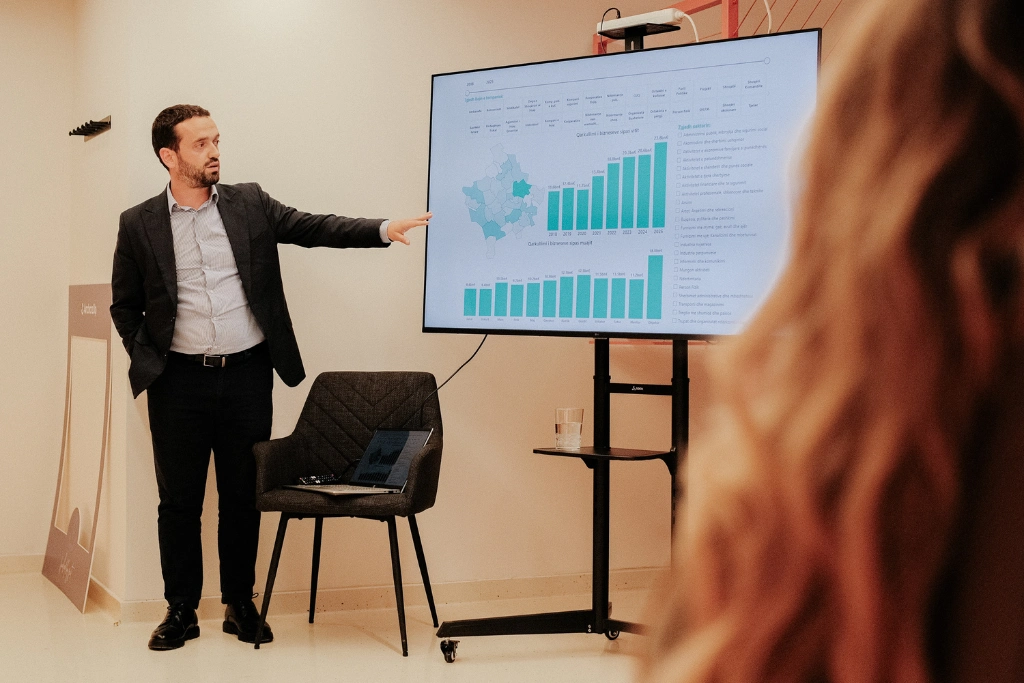
As part of our ongoing commitment to connecting learning with real-world expertise, we regularly host guest lectures by professionals from a wide range of fields, mostly outside our immediate industry. The goal is to broaden our perspective, challenge our beliefs, cultivate more thoughtful conversations, and explore ideas across disciplines -from leadership and psychology to economic and technical domains.
In this context, we had the opportunity to welcome Blendi Hasaj, Executive Director of the GAP Institute. His session, titled “Kosovo’s Economy: Main Characteristics, Development to Date, and Opportunities.” This session offered a balanced overview of Kosovo’s economic development, highlighting progress and structural challenges.
Blend Hasaj leads the GAP Institute, one of Kosovo’s most recognized think tanks, known for its objective, research-based analysis of economic and public policy issues. Through its work, the institute aims to present an accurate picture of the country’s economic reality and support better-informed decision-making.
Kosovo’s Economic Reality: Key Characteristics
Over the past decade, Kosovo’s economy has shown consistent growth, with GDP doubling between 2014 and 2024, reaching €11.1 billion. This reflects a steady upward trend and increasing economic activity over time.
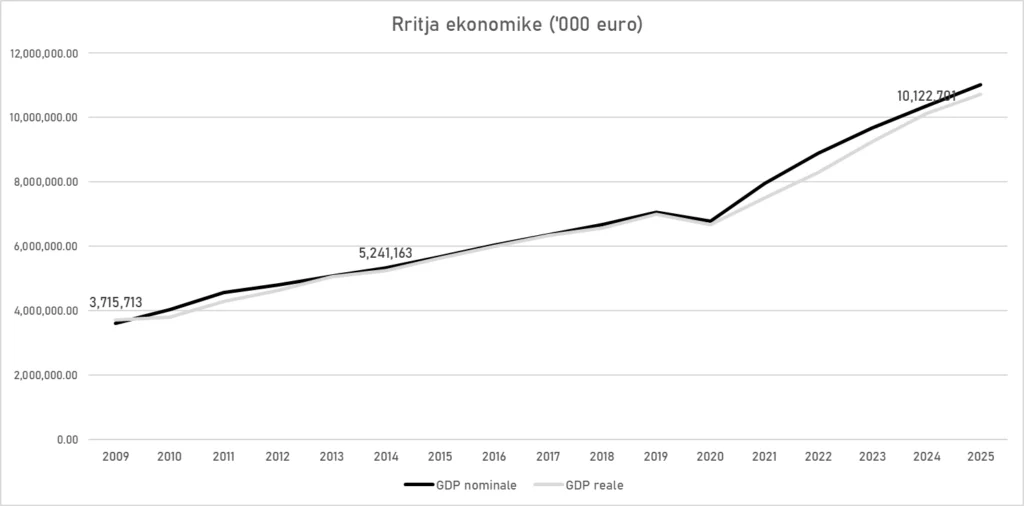
Source: Presentation by Blend Hasaj, GAP Institute
At the same time, the labor market presents a mixed picture. While around 415,000 people are employed and the unemployment rate has decreased to roughly 10-11%, a significant portion of the population remains economically inactive, especially women, highlighting untapped potential within the workforce.
Against this backdrop, one of the key structural limitations highlighted during the lecture is that Kosovo does not control its own monetary policy. Having unilaterally adopted the euro, the country relies solely on fiscal policy, such as taxation and government spending, as its main tool for economic intervention.
On a more positive note, Kosovo benefits from relatively low tax rates, including a 10% income tax and 0% tax on dividends, which creates a favorable environment for both businesses and individuals. This fiscal advantage is particularly pronounced in higher-paying sectors such as ICT, where professionals can retain a larger share of their income than in many Western countries.
As a result, many skilled professionals are choosing to build their careers locally rather than seek opportunities abroad. With competitive salaries and lower living costs, they can enjoy a higher quality of life, making it a practical and attractive choice to stay in Kosovo.
This dynamic points to an important opportunity: with the right economic conditions, Kosovo can retain talent and reduce brain drain, especially in sectors where incomes are competitive.

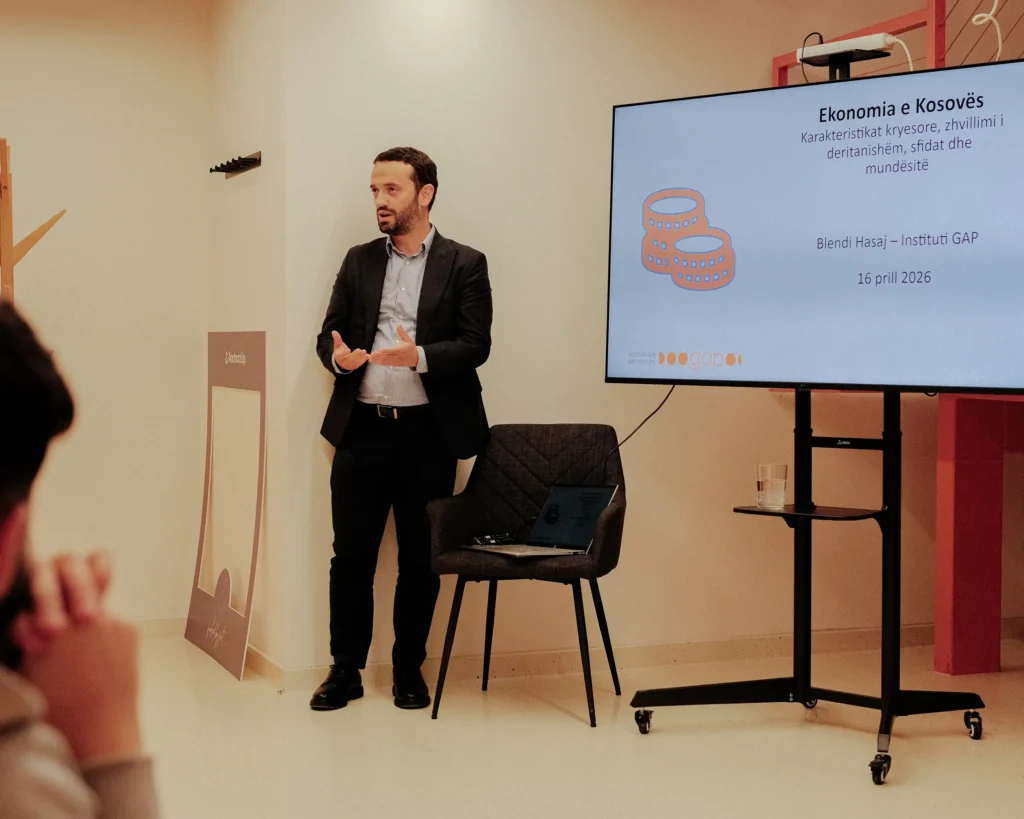

Furthermore, Blend Hasaj explained how Kosovo’s economic performance is measured, highlighting the distinction between Nominal GDP and Real GDP, helping put growth into perspective. This distinction also helps explain what is actually driving that growth.
Through this, it became evident that Kosovo’s economy is largely driven by consumption and remittances from the diaspora. While this has supported steady growth, it also raises important questions about long-term sustainability and the need to strengthen productive sectors.
Key Economic Challenges and Insights
Mr. Hasaj also touched on several important dynamics shaping Kosovo’s economy today.
A central theme was the role of the diaspora, which continues to be a major economic driver through remittances. Much of this capital is directed toward consumption and real estate, which supports economic activity in the short term. However, it also highlights an opportunity to channel more of these funds into productive investments that generate long-term value.
He also addressed Kosovo’s trade imbalance, in which imports far exceed exports, reflecting limited domestic production capacity. At the same time, sectors like tourism and ICT services are helping improve the overall balance, with the ICT sector standing out as a strong example of organic growth and untapped potential.
Another pressing issue discussed was inflation, largely driven by rising food and energy prices. Given Kosovo’s import-dependent structure, external price increases are quickly reflected in the local market. Also, the fact that the country does not conduct its own monetary policy means that the ability to respond directly to inflationary pressures remains limited.
Mr. Hasaj emphasized the importance of targeted policies to support the most affected citizens, while also acknowledging the complexity of managing inflation in a small, open economy like Kosovo’s.
Beyond these, he highlighted broader structural challenges such as emigration, an aging population, and skills mismatches, issues that are not unique to Kosovo but require long-term, coordinated solutions. He stressed that increasing workforce participation, especially among women, remains a key opportunity for future growth.


What Kind of Development Should Kosovo Aim For?
The lecture concluded with a forward-looking perspective.
Kosovo needs to shift toward:
- A sustainable economic model
- A stronger industrial policy
- A more active role of the state in economic development
- A functional public administration
In short, the goal is to move from a consumption-driven economy to a production- and investment-driven one, supported by smart policies and inclusive growth.
Key Takeaways from the Lecture
This session provided a clear and honest reflection of Kosovo’s economic reality:
- Growth exists, but structural weaknesses remain
- The economy heavily depends on remittances and consumption
- There is untapped potential in production, ICT, and workforce participation
- Strategic government intervention is necessary for long-term sustainability
Most importantly, it highlighted that Kosovo’s future depends on how effectively it can transform its current model into a more resilient and inclusive economy.